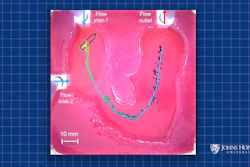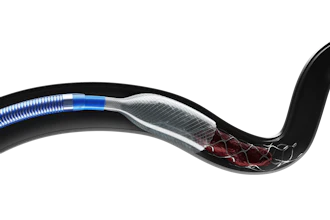
Parasol Med Tech has closed an oversubscribed $2.75 million pre-seed funding round to advance development of its next-generation left atrial appendage closure system, developed based on research at the University of Chicago.
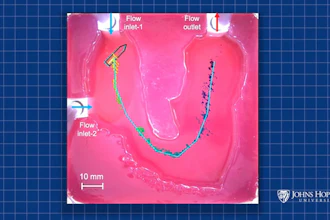
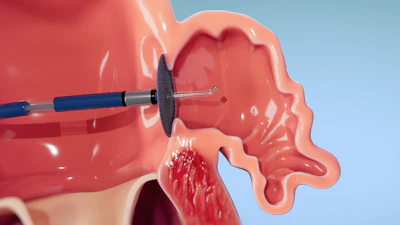
The system is designed to prevent stroke in patients with atrial fibrillation (AFib), an irregular and often very rapid heart rhythm, which can lead to blood clots in the left atrial appendage.
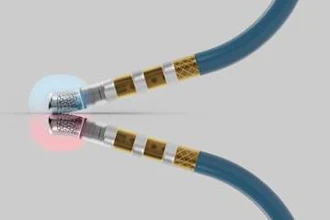
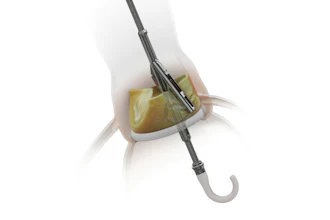
“We’re extremely thankful for the vote of confidence from our investors as we work towards reducing stroke risk in AFib patients. We’ll be using proceeds for R&D and to test, iterate, and optimize our novel catheter and gel system to seal the left atrial appendage,” said Parasol CEO Evan Singer in a statement.
The round included participation from Harper Court Ventures, UCM Ventures, a venture investment vehicle of the University of Chicago Medical Center, and Cardiovascular Innovation Ventures, the venture arm of the American College of Cardiology.
“Having closed more than a thousand left atrial appendages, I’ve seen exactly where today’s devices fall short — residual leaks around the implant, clots forming on the device itself, and patients stuck on blood thinners they can’t tolerate. Parasol was built around a simple idea: the device should conform to the patient’s anatomy, not the other way around. This funding lets us take that personalized approach through the next stage of testing and closer to human patients,” said Atman Shah, Parasol founder and chief medical officer.
Shah, an interventional cardiologist and Professor of Medicine at the University of Chicago, is an expert in transcatheter interventions, specifically left atrial appendage closure and minimally invasive stroke prevention.
“Innovation is essential to transforming cardiovascular care and improving heart health for all,” said Richard Chazal, chair, board of managers, Cardiovascular Innovation Ventures. “By exploring a novel approach to reducing stroke risk in people with AFib, Parasol represents the type of forward-thinking technology Cardiovascular Innovation Ventures seeks to support to help improve patient outcomes and quality of life.”
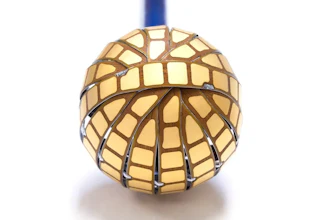
Hannah Levine, executive director of UCM Ventures, said: “We are particularly impressed by the novelty of Parasol’s approach, which is tailored to each patient and, unlike today’s leading devices, leaves no metal in the body. With millions of people living with AFib and most cases untreated today, Parasol has the potential for enormous impact.”
As part of the University of Chicago, UCM Ventures provides access to clinical, operational, and entrepreneurial resources. Its partnership with the Polsky Center for Entrepreneurship and Innovation strengthens its ability to help early-stage companies refine and scale innovations.
“As atrial fibrillation becomes more widely diagnosed, the need for effective stroke prevention continues to grow,” added Ayo Roberts, principal, Harper Court Ventures. “We’re pleased to support Parasol as it advances a personalized approach to left atrial appendage closure for this large and expanding market.”
Launched in 2025, Harper Court Ventures, through a formal cooperation agreement with the University of Chicago, supports the University’s entrepreneurial ecosystem, funding early-stage ventures spun out of University labs, accelerated by the Polsky Center, or founded by alumni.
Shah initially worked with Polsky Center’s Ben Cox, senior manager of intellectual property and medical device engineer, to translate the idea into a CAD model and generate detailed drawings. Cox then helped raise matching funds before working with Shah to apply for a proof-of-concept grant, which was awarded in collaboration with the University’s Biological Sciences Division.
In 2024, Shah also participated in the Polsky Center’s I-Corps program, before continuing on to the National program. Shah built his I-Corps team through meeting Chicago Booth students at the Polsky Center’s Collaboratorium. After completing these programs – which are designed to test the commercial potential and impact of an idea – Parasol applied and was accepted into the 2026 George Shultz Innovation Fund. As a finalist, the startup pitched to the Innovation Fund Advisory Committee and was awarded $250,000 in investment funding.
Now, building on its recent growth fueled by the close of its pre-seed round, Parasol also has joined the UChicago Science Incubator for additional support as it looks to bring its innovation from the lab to the market – and the patients who will benefit.