Medtronic received FDA approval for its Mosaic Neo mitral bioprosthesis and has launched the valve in the U.S. This approval marks an important milestone for patients and clinicians.
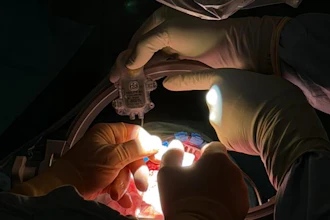
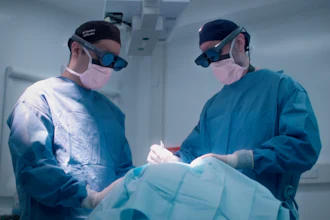
The Mosaic Neo mitral bioprosthesis is designed to be implanted through sternotomy, Minimally Invasive Cardiac Surgery (MICS) and robotic access, all of which were recently used when initial implants were performed at numerous centers across the U.S. including The Mount Sinai Hospital New York, where David H. Adams, M.D., implanted the first Mosaic Neo mitral valves worldwide.
Simultaneously, the first concomitant use of the Mosaic Neo mitral valve and the recently introduced Penditure Left Atrial Appendage (LAA) Exclusion System was performed by Gorav Ailawadi, M.D., Director, University of Michigan Health Frankel Cardiovascular Center, Helen F. and Marvin M. Kirsh Professor of Cardiac Surgery, University of Michigan, Ann Arbor, Michigan.
The first robotic implantation of the Mosaic Neo mitral valve was performed by Vinay Badhwar, M.D., and Executive Chair of the West Virginia University (WVU) Heart and Vascular Institute. The Mosaic Neo mitral valve will be officially launched at the American Association for Thoracic Surgeons (AATS) 106th Annual Meeting in Chicago on May 2-5, 2026.
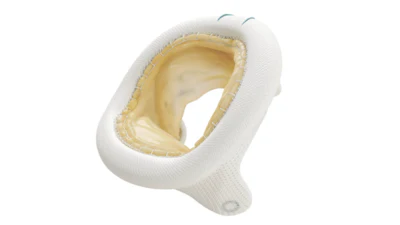
“The Mosaic Neo mitral valve builds on the prior Mosaic platform, and the new intuitive sizers, strut suspension system, valve holder, and sewing cuff are all noticeable improvements,” said David H. Adams, M.D., Marie-Josée and Henry R. Kravis Professor and System Chairman of the Department of Cardiovascular Surgery, Icahn School of Medicine at Mount Sinai Hospital.
The Mosaic Neo mitral valve combines enhanced user experience along with improved hemodynamics and durability as demonstrated by the Mosaic mitral valve. To facilitate patient lifetime management, the Mosaic Neo mitral valve combines a reduced left ventricular stent post protrusion, a unique wide anterior distance between the stent posts, intuitive orientation markers and improved visualization under fluoroscopy to enable Left Ventricular Outflow Tract (LVOT) clearance and preservation of the neo-LVOT.