ABBOTT PARK, Ill. -- Abbott has received U.S. Food and Drug Administration (FDA) clearance and CE Mark for its next-generation Ultreon™ 3.0 Software.
Ultreon 3.0 is an artificial intelligence (AI) powered imaging platform that uses optical coherence tomography (OCT) to give doctors real-time planning guidance while they perform minimally invasive procedures to open blocked heart arteries known as percutaneous coronary intervention (PCI).
The technology allows physicians to use OCT images to see the detailed structure of the blockage and incorporates AI to assess the type of plaque causing the blockage, helping the doctor choose the best location and size of the stent to improve blood flow. The platform offers a fully integrated workflow to support faster, more precise procedures.
"Ultreon 3.0 represents a pivotal step forward in how we treat and ultimately care for our patients. This next-generation platform, combining imaging and AI, doesn't just improve upon existing technology — it leapfrogs it," said Evan Shlofmitz, D.O., interventional cardiologist, director of interventional cardiology, St. Francis Hospital and Health Center in Roslyn, NY. "By delivering greater clarity, speed, and clinical insight, Ultreon 3.0 accelerates the path to more confident clinician decision making and transformative patient care."
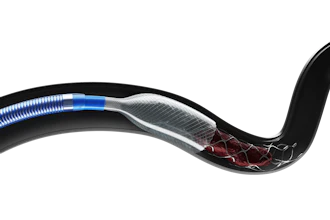
The software features a one-second OCT pullback, which is a high-speed infrared light-based imaging technique that quickly captures detailed cross-sectional views of the coronary artery, offering higher resolution readings than intravascular ultrasound (IVUS) and with low or zero contrast. Minimizing the amount of contrast may be helpful in some patients with kidney disease, who represent approximately 25% of people with coronary artery disease.i
The AI and software capabilities of Ultreon 3.0 include the following additional benefits:
- A clear understanding of the size, shape, and location of a coronary blockage, enabling optimal stent placement to maximize blood flow and guide treatment planning.
- A post-procedure assessment to ensure the stent improved blood flow in the artery.
- A streamlined setup and enhanced AI-automated insights that simplify physicians' workflow.
- Easily acquired images from inside blood vessels and ability to efficiently plan procedures, specifically tailored for patients with complex coronary disease.
Complex PCI is a specialized procedure used to treat severe coronary artery disease. PCI involves treating challenging lesions—or plaques—that have built up in a patient's coronary arteries. Some patients will require multiple stents to address the lesions. More than 600,000 people in the U.S. and more than 885,000 in Europe undergo PCI each year.