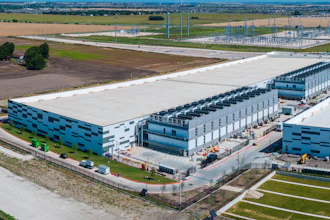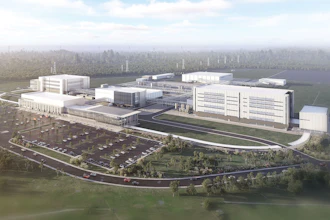
Bayer plans to invest $2.2 billion in a new pharmaceutical manufacturing site in New Albany, Ohio.
“Bayer has long seen the United States as a key manufacturing base and innovation hub. This landmark investment underscores our commitment,” said Bayer CEO Bill Anderson in a statement. “The new site will be home to manufacturing expertise and a skilled workforce that will strengthen our ability to deliver innovative, high-quality medicines to patients both in the United States and abroad.”
The company said the site is expected to create around 600 jobs in the New Albany International Business Park and roughly 1,500 construction jobs during the facility’s construction.
The modular campus will be designed to combine drug substance and drug product manufacturing, use advanced digital and automation technologies, and support the company's growing portfolio in oncology, cardiovascular and renal care. The first module, dedicated to drug substance manufacturing, is expected to become operational in 2031.
A second module for drug product manufacturing is planned to follow in 2034. The new site will complement Bayer’s U.S. pharmaceuticals headquarters in Whippany, New Jersey and its other sites in Pittsburgh, Pennsylvania; Berkeley, California; Cambridge, Massachusetts; Research Triangle Park, North Carolina; and San Diego, California.
“The facility will be a strong strategic addition to our global Product Supply network. As we continue to invest in our existing manufacturing sites around the globe, our planned presence in Ohio will further enhance our ability to serve our markets with greater resilience and reliability,” said Holger Weintritt, Head of Product Supply at Bayer’s Pharmaceuticals division, in a statement.
The site will also form part of a new U.S. based collaboration ecosystem. The ambition is to connect academic innovation with advanced manufacturing expertise to create a strong ecosystem that supports future-ready pharmaceutical production.