ITEN, a French company that develops and manufactures solid-state energy storage solutions, recently announced a major development program to adapt its high-capacity solid-state battery technology for Class III implantable medical devices.
Through SOLIMED, ITEN’s development project within the European IPCEI Tech4Cure initiative, the company will adapt and fine-tune its high-capacity solid-state battery technology for the stringent requirements of devices implanted inside the human body. The technology is being developed to enable smaller implantable devices, faster wireless recharging and longer operating life, helping improve patient comfort and reduce the need for replacement surgeries.
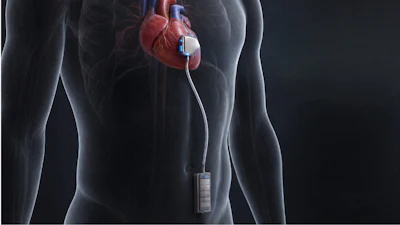
The program marks an important step in ITEN’s development in the medical market. Already developing and supplying batteries for Class I and Class II medical devices, ITEN is now extending its technology platform to the highly demanding Class III implantable device market. Through this program, ITEN aims to pioneer the deployment of solid-state battery technologies for Class III implantable cardiac pumps.
The technology is being developed to combine safety, high energy density, fast-charging capabilities, reliability and long operating life. Development targets include a cell energy density of 600 Wh/L, cell capacity above 2 Ah and the ability to recover 80% of capacity in less than 20 minutes.
Solid-State Technology for One of the Most Demanding Battery Applications
Energy storage is a critical challenge for active implantable medical devices. Batteries must provide sufficient energy within an extremely limited volume while meeting stringent requirements for safety, reliability and operating life.
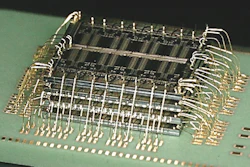
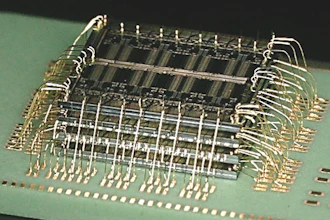
ITEN’s technology builds on its core expertise in nanomaterials, leveraging their properties to create full-ceramic electrodes that are stacked and overmolded to form the battery module. Unlike conventional batteries using liquid electrolytes, ITEN’s all-solid-state architecture avoids the liquid electrolyte and organic materials used in conventional batteries, eliminating the risk of thermal runaway and flammability. Moreover, the monolithic architecture of ITEN’s ceramic battery drastically reduced the volume variation of the cells, removing a key factor that limits the battery lifetime.
The technology's intrinsic stability also dramatically reduces the risk of swelling or temperature increase during battery pack operation, critical considerations for devices designed to operate inside the human body.
For cardiac assist applications, a pack including several ITEN modules and a battery management system (BMS) will be developed.
The high energy density targeted by ITEN is expected to enable the design of a compact battery pack placed inside the body. Fast-charging capability is intended to support transcutaneous wireless recharge, enabling the implanted battery to recover most of its capacity in minutes.
Long operating life is another major development objective. Extending the lifetime of the battery subsystem could help reduce the need for surgical procedures to replace implanted battery packs.
“Implantable medical devices represent one of the most demanding applications for any energy storage technology,” said Vincent Cobée, CEO of ITEN. “Safety is paramount, but it must be combined with high energy density, fast charging, reliability and long operating life. This development program is a major milestone for ITEN and a strong validation of our core solid-state technology platform. It opens the way to a new generation of solutions for Class III medical devices, supporting our ambition to become a global leader in advanced solid-state energy storage.”
Enabling Smaller, Safer and Longer-Lasting Implantable Devices
For patients, advances in energy storage technology can translate into tangible benefits.
Higher energy density can enable smaller, more highly integrated implantable devices. Fast charging reduces the time required to recharge an implanted battery through the skin. Longer battery life helps reduce the need for replacement procedures. At the same time, the inherent safety characteristics of solid-state technology are particularly relevant for devices designed to remain inside the human body for extended periods.
Beyond the cell itself, the development program will also explore innovative approaches to battery packaging.
The post-processing capabilities of ITEN’s technology will enable the company to evaluate new biocompatible overmolding materials for the complete battery subsystem. The objective is to explore alternatives to the traditional titanium cases used for implantable batteries.
This combination of solid-state cell technology, compact battery pack design and new biocompatible encapsulation approaches could enable new levels of integration for future generations of implantable medical devices.
Opening a Broader Opportunity in Class III Medical Devices
While the cardiac assist application provides the first use case for the development program, ITEN sees a much broader opportunity for its technology across the Class III medical device market.
The technology being developed will address the energy storage requirements of neurostimulators, hearing implants, implantable pumps and other active implantable medical devices.
The stringent quality and reliability requirements associated with Class III devices are also expected to drive improvements that can benefit ITEN’s broader portfolio for Class I and Class II medical applications.
For ITEN, the project represents a strategic step into the high-value Class III medical device market. Building on its existing presence in medical applications, the project will extend the company’s technology platform into implantable devices and support its ambition to become a global leader in solid-state energy storage technologies.
A Strategic Technology for Europe
SOLIMED is part of IPCEI Tech4Cure, a European initiative supporting breakthrough medical technologies and strengthening Europe’s healthcare innovation capabilities and technological sovereignty.
The project contributes to this broader European ambition by developing advanced solid-state energy storage technology for critical medical applications and strengthening European expertise in batteries for the implantable medical device market.
By combining European expertise in advanced solid-state energy storage and next-generation cardiac assist devices, the program contributes to the development of critical technologies and stronger European value chains for future medical devices.