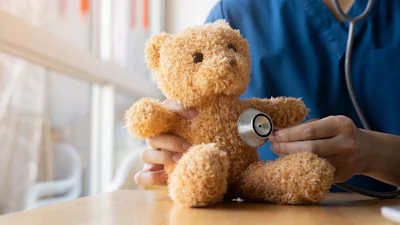
Teddy bears fitted with medical devices such as gastronomy (feeding) tubes may help normalize and lessen medical anxiety in children who need the same devices, according to a project presented during the American Academy of Pediatrics 2026 National Conference & Exhibition Oct. 2-6, 2026, at the San Diego Convention Center.
Children who live with medical devices often feel anxious or self-conscious about them, especially around other kids at school. Pediatric residents at the Mayo Clinic hoped to find a way to make their patients a bit more comfortable. Their solution: teddy bears fitted with the same medical devices such as gastronomy tubes, tracheostomy tubes, and pacemaker devices their young patients have.
The program, outlined in an abstract titled, “The Teddy Bear Clinic: A Therapeutic Play Intervention to Normalize Pediatric Medical Devices,” offers benefits to medical students, pediatric residents, and their patients. Medical students and residents are able to practice their suturing techniques while preparing the bears with each device and patients see a real-life representation of their own care. The additional suture practice also helps medical students and residents become more confidant in their abilities and can double as a peer-education tool.
"Therapeutic play has long been used to ease children's medical fears, but this advocacy project specifically targets the body-image and self-consciousness piece, the part of a child's experience tied to feeling ‘different’ because of a medical device,” explained Anders Jenson, M.D., PGY-2 Pediatric Resident at Mayo Clinic. “It's a small, easily replicated idea with a real emotional payoff for kids with medical devices.”
Additionally, the program is fairly low cost, with the authors receiving a grant for just $2,200 that was used to purchase about 200 bears. Medical equipment also came at little cost as manufacturers donated many of the supplies while others were made from everyday materials like inflation valves.
The bears can become a hands-on recruitment tool that introduces medical students to pediatrics through a low-pressure, high-impact, meaningful project, authors state. Families can also use the bears as a tool to practice care steps the child needs on their devices and can be a way to help other children understand and accept others who use medical devices.
"As someone with a medical device myself, I remember how isolating it could feel growing up surrounded by those without one,” Dr. Jenson said. “I hope these teddy bears help children to feel more comfortable and confident with their medical devices, knowing that they are not alone in their journey."
This research received external funding from Kid’s Cup Rochester.