Applying a mild electrical current through the skin is a drug-free way to manage menstrual pain and intense muscle soreness, but at-home devices that deliver the current are bulky and difficult to use effectively, and they require sticky gels. Now, scientists reporting in ACS Applied Materials & Interfaces have developed a reusable pain-relieving textile electrode that could be incorporated into clothing. In a preliminary test, the electrodes transmitted electrical stimulation through skin-care products to a person’s skin.
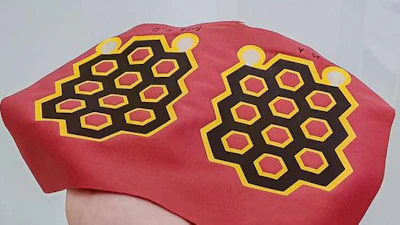
Transcutaneous electrical nerve stimulation (TENS) therapy transmits low-voltage electrical pulses through small electrode pads to muscles and nerves. TENS stimulation, for many people, blocks pain signals and induces natural pain-relieving chemicals such as endorphins. Conventional TENS units, however, demand precise electrode placement and significant electrode maintenance, and their hydrogel-coated adhesive backing can cause skin irritation. To address these challenges, Katarzyna Wójkowska, Daniel Janczak, and colleagues produced reusable screen-printed textile electrodes that can be sewn into clothing such as underwear, sleeves, or leggings. “Our long-term vision is to make electrical pain-management technologies more comfortable, discreet, reusable, and accessible to ordinary users,” says Wójkowska, a corresponding author of the study.
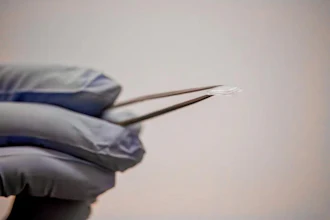
The electrodes are composed of a silver layer to conduct electrical signals from a TENS device powered by a battery and a carbon-based layer that touches the skin. The researchers designed the electrodes in rectangular and honeycomb configurations. In tests that included repeated stretching and laundering, the honeycomb structure was less prone to fracturing and maintained electrical conductivity. Furthermore, the team found that any diminished performance could be largely restored with heat pressing with an iron.
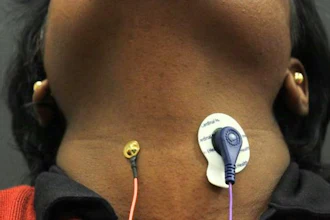
In a preliminary test with one healthy volunteer, the researchers compared the electrode’s performance on dry skin and on skin moisturized with mimics of commercial body lotions, a water-based gel, or glycerin-based moisturizing creams. The gel and creams conducted current better than dry application, suggesting that everyday skin-care products could be an alternative to the coatings typically used for the electrodes.
“The next important step is to combine our textile electrodes with an actual electrical stimulation device and evaluate the complete system under realistic operating conditions,” Wójkowska says. “We also intend to expand the research in collaboration with medical and physiotherapy specialists, including assessments involving a larger and more diverse group of participants.”
The authors acknowledge funding from Warsaw University of Technology within the Excellence Initiative: Research University programme, YOUNG PW II activity.