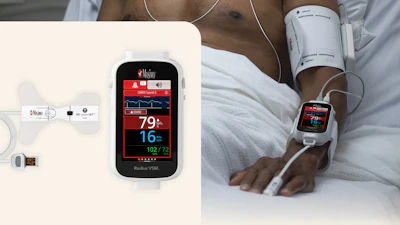
Masimo today announced FDA 510(k) clearance for an opioid-induced respiratory depression detection capability integrated into the Radius VSM wearable continuous patient monitor.
Enabled by Masimo’s next-generation smartSET pulse oximetry sensor platform, the new feature uses advanced pattern recognition that analyzes continuous physiologic data to help clinicians identify early signs of respiratory compromise in hospital patients receiving opioid therapy.
This clearance represents the first implementation of Masimo’s OIRD detection capability in a hospital monitoring solution. SmartSET features like OIRD detection are expanding the role of pulse oximetry from monitoring patient status to surfacing actionable insights. To accelerate the potential impact of such technology on how patient care is delivered throughout the hospital, Masimo is developing additional pattern-recognition algorithms for the smartSET platform.
Building on RD SET sensor technology, smartSET is engineered to unlock the value of continuous parameter insights by analyzing complex physiological patterns and relationships rather than relying on individual parameters alone. Its design also allows for future integration into additional hospital monitoring solutions, extending its transformative impact across care environments as part of Masimo’s broader connected ecosystem.
Radius VSM is a wearable, tetherless, modular vital signs monitor designed to support continuous assessment of patient status throughout the hospital, with the ability to tailor monitoring to meet each patient’s needs. The addition of smartSET-powered analysis and OIRD detection to Radius VSM expands the platform’s ability to assist clinicians in spotting changes in patient condition and helps bring advanced physiological insight to more care areas. The OIRD feature includes visual alarms, which alert clinicians to changes in a patient’s condition and escalate as OIRD risk increases. The alarms are presented on the device’s display and can be relayed to remote and centralized monitoring stations.