LambdaVision, a pre-clinical-stage biotech advancing on-Earth and microgravity bioprocesses, today announced a strategic partnership with Helogen to launch a joint orbital manufacturing mission of LambdaVision’s artificial retina protein aboard Helogen’s fully autonomous manufacturing system in low-Earth orbit. The mission is targeted for launch in the second half of 2026.
As this planned mission will mark LambdaVision’s first flight outside of the International Space Station (ISS), the partnership represents a step in LambdaVision’s long-term strategy to translate more than a decade of research in microgravity into a scalable space-based manufacturing approach for anticipated commercialization of its artificial retina.
In addition to evaluating technological capabilities for low-Earth orbit manufacturing of high-quality biomaterials for LambdaVision’s artificial retina, the mission also aims to demonstrate that the platforms developed by LambdaVision and Helogen represent operational and custody frameworks required for future GMP-compliant production in space that can be utilized by future companies and is able to meet the consistency, traceability, and rigor required to bring a range of transformative therapies to patients.
The mission builds on LambdaVision’s prior work on the ISS demonstrating the benefits of microgravity for layer-by-layer protein deposition. While the artificial retina can be produced on earth, the microgravity environment offers reduced sedimentation and fluid-driven disturbances, which enable improved uniformity, stability, and performance of multilayer thin films.
The mission is designed as a full operational validation, from ground preparation and flight qualification through in-orbit manufacturing, sample return, and custody transfer. This approach supports the development of traceability and handling standards required for regulated biological manufacturing. Data will be collected remotely in real time, beginning days after launch, which will help the company prepare for other long-term or non-return space flights.
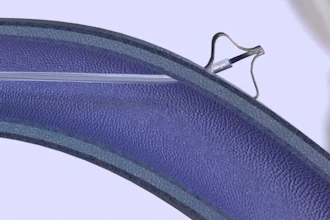
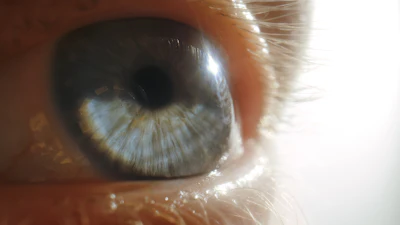
LambdaVision’s artificial retina is designed as a small, flexible implant composed of multilayered protein films that restore light sensitivity in the retina. The company has completed 9 spaceflight missions demonstrating the feasibility of manufacturing and producing these 200-layer films in microgravity. Production is being explored both on Earth and in commercial low-Earth orbit.