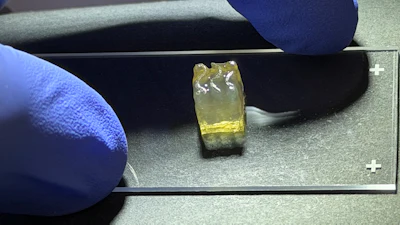
Auxilium Biotechnologies announced a milestone in space biomanufacturing with the successful bioprinting of kidney and liver tissues aboard the International Space Station (ISS).
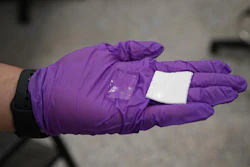
During the mission, Auxilium’s AMP-1 orbital bioprinter manufactured kidney, liver, and cartilage tissues while also producing 28 nerve repair implants. The achievement represents the first demonstration of kidney tissue manufacturing in space, the first demonstration of liver tissue manufacturing in space, and the first mission to manufacture three distinct tissue types during a single spaceflight. The production of multiple tissue types and clinically relevant nerve repair implants represents the first demonstration of a scalable, multi-product biomanufacturing platform in space.
The mission also demonstrated the ability of a single autonomous manufacturing platform to produce both living tissues and implantable medical products during the same flight. The simultaneous production of multiple tissue types alongside 28 nerve repair implants highlights not only the versatility of the platform, but also its scalability and higher-throughput manufacturing in space.
The kidney and liver tissues were manufactured in support of research conducted by the Wake Forest Institute for Regenerative Medicine (WFIRM) using the institute’s cells and tissue designs. Auxilium provided the orbital manufacturing platform that enabled tissue fabrication in microgravity.
The successful bioprinting of kidney, liver, and cartilage tissues represents an important step toward enabling advanced biomedical research in space. One particularly promising application is the production of organoids, three-dimensional miniature tissue models that replicate key structural and functional characteristics of human organs. Organoids are increasingly used by researchers and pharmaceutical companies to study disease mechanisms, evaluate drug safety, screen new therapeutics, and predict responses to treatment.