Radhika Saran, Cleo Pontone, and Sophia DeVito, students at Harvard University, have been named the U.S. National Winners of the James Dyson Award 2026 for their invention, Rumble Rims.
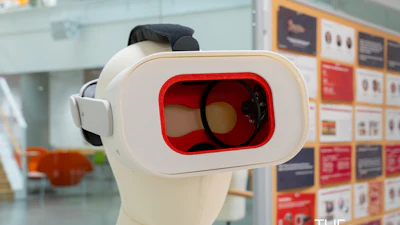
The low-cost infrared eye-tracking headset is designed to help schools screen for possible concussions in about 60 seconds.
Rumble Rims was developed to close a gap in concussion care between expensive clinical systems and subjective sideline checks. The system combines a portable infrared headset, coach-facing display and recovery dashboard to give schools a more accessible way to track eye movements that research suggests may provide an objective window into concussion-related neurological disruption.
The headset uses infrared cameras and hot mirrors that reflect infrared light to the cameras while allowing visible light to pass through, preserving a clear line of sight for the athlete. During screening, the athlete completes an oculomotor task that captures how the eyes follow, fixate, and move. The coach-facing mobile display then translates complex eye-tracking measurements into real-time guidance that can help inform whether an athlete should be removed from play and referred for professional medical evaluation. After the game, the recovery dashboard allows repeat testing over time, creating an objective record that athletes, families, and clinicians can use to monitor progress before return-to-play. Rumble Rims is intended as a screening tool, not a diagnostic device; return-to-play decisions should remain under the direction of a qualified healthcare provider.3
The team's research included conversations with coaches and Matthew McTague, a certified physical therapist and former collegiate athlete, whose feedback helped shape Rumble rims' sideline-first design. McTague noted that concussion symptoms may not always appear when an athlete is tested at rest, but can emerge once heart rate, movement, balance, and eye tracking are challenged. His perspective highlighted the need for objective testing, since athletes in high-pressure situations may underreport symptoms. He recommended using tools like smooth pursuit eye tracking and real-world testing to improve evaluations.
Rumble Rims takes home $6,500 from the James Dyson Award national prize to support its next steps in development. The team plans to build and test a higher-fidelity headset prototype, refine the oculomotor test and validate the system with athletes, coaches, trainers and medical advisors. Long term, they hope to pilot Rumble Rims with schools and youth sports programs, pursue medical-device validation pathways and make objective concussion screening accessible to every sideline.
While the technology is still in development, its focus on objective eye-movement data responds to a clear clinical need: concussion assessment today still often depends on symptoms, history and clinical evaluation, while structural imaging is frequently normal and self-reporting can be incomplete.4
Radhika Saran, co-creator of Rumble Rims, said: "We wanted to give coaches, athletes and families clearer information at the exact moment of risk. If objective tools already exist, they should not be locked inside expensive clinical systems. They should be accessible where young athletes are actually getting injured."
Cleo Pontone, co-creator of Rumble Rims, said: "We wanted to create something human-centered and research-driven. The strongest solutions start with understanding the people who will actually use them and the environments they will be used in."
Sophia DeVito, co-creator of Rumble Rims, said: "The best solution for a problem might not sit inside one person's expertise. That is why interdisciplinary collaboration was so important to this project."
The team's sideline-first design process was shaped by user research with athletes, coaches, medical professionals, and physical therapists. Early concepts explored helmets, mouthguards, a black-curtain room, and expandable structures that enclosed the screen, camera, and athlete's face. Through testing, the team realized accuracy depended less on building a controlled room and more on controlling the relationship between the eyes and cameras, leading to a headset design that moves with the athlete's head while keeping the screen separate and setup simple for coaches under sideline pressure.