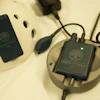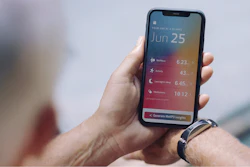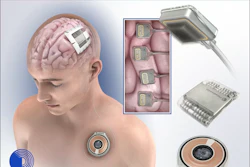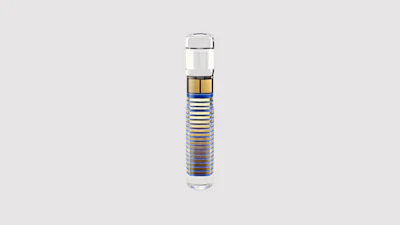
Senseonics, a diabetes company developing continuous glucose monitoring (CGM) with long-term implantable sensing technology, this week announced the initiation of its first-in-human clinical study evaluating Freedom, an investigational next-generation CGM system designed to communicate directly with a mobile device without the need for an external on-body transmitter.
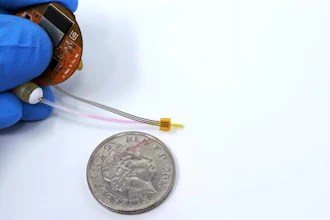
It is an evolution of the same fundamental sensing technology as the Eversense 365 system, with the addition of an integrated battery and embedded Bluetooth communication capability. It is designed to have no requirement for an on-body component, while maintaining the benefits people already value with Eversense 365, providing exceptional accuracy over a full year with a single sensor.
"Now being tested in humans for the first time, the Freedom CGM represents our vison to eliminate the requirement for an on-body component, effectively making continuous glucose monitoring invisible. We believe this represents an extremely attractive proposition for millions of people with diabetes and we are proudly leading the race to get there,” said Tim Goodnow, PhD, President and Chief Executive Officer of Senseonics. "At Senseonics, we are not interested in incremental innovation. Our mission is to transform lives in the diabetes community and push the boundaries of sensing technology to improve health and wellbeing. Eversense 365 redefined what a CGM could be by becoming the world's first and only one-year system and we are just getting started."
The initiation of this first-in-human clinical study is a key milestone for Senseonics as the Company continues to invest in its innovation pipeline. It is an early feasibility study to evaluate the device design concept with respect to clinical safety and device functionality, including the sensor’s direct Bluetooth communication capabilities. The study’s purpose is to demonstrate safety and generate insights to inform a planned pivotal study that Senseonics expects to initiate in 2027, with the company targeting a potential commercial launch in 2028.
The initiation of the first-in-human study follows encouraging results from preclinical studies completed during the second quarter of 2026, which evaluated multiple Bluetooth Low Energy (BLE) antenna designs and implantation locations to optimize communication performance and guide configuration selection. Across approximately seven weeks of testing and more than 18,500 communication data points, the preferred design demonstrated 100% communication success within our target distance. As a result, the study identified a preferred antenna configuration and implantation approach for human evaluation.