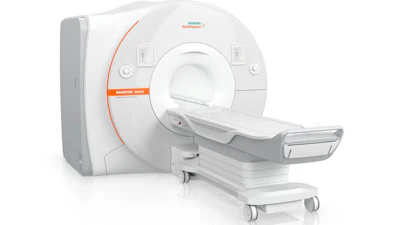
Paradromics, a neurotechnology company developing brain-computer interfaces (BCI) to restore and enhance human capabilities, today announced a collaboration with Siemens Healthineers to develop a multimodal imaging platform designed to support the growing clinical use of implantable BCIs.
The companies will develop an integrated imaging approach spanning the continuum of BCI care, from patient candidacy assessment and neural target identification through surgical planning, intraoperative navigation, post-implant localization, neural validation of functional imaging findings and outcomes assessment.
“Building the best hardware is only part of the story. BCI performance begins before an implant ever reaches the brain,” said Matt Angle, Ph.D., founder and CEO of Paradromics, in a statement. “The ability to understand each patient’s individual anatomy and functional organization can help us identify the right neural target and place our technology with greater accuracy. Working with Siemens Healthineers will help us streamline this process prior to surgery, so that patients get the best possible outcome.”
Building on standard imaging protocols already used by Paradromics on Siemens Healthineers scanners, the companies intend to develop an optimized end-to-end imaging package encompassing image acquisition, co-registration and processing, surgical-navigation-ready outputs and increasingly automated analysis. The goal is to create an approach that can ultimately be deployed efficiently across medical centers using Siemens Healthineers imaging systems.
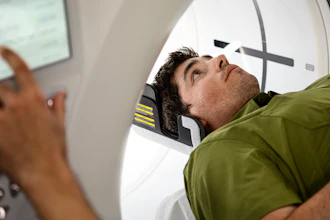
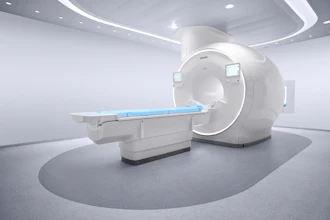
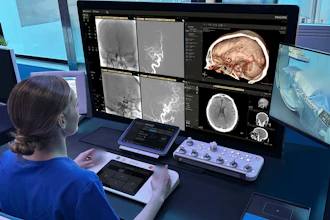
The planned workflow will integrate multiple imaging modalities, including structural MRI, functional MRI, vascular imaging and CT. Together, these technologies can help clinical teams assess brain anatomy, identify functionally relevant regions, plan surgical trajectories, avoid critical vascular structures, and determine the final location of implanted BCI components.
End-to-end imaging workflows will also be developed in cooperation with Paradromics clinical research investigators, including Daniel B. Rubin, MD, PhD, of the Mass General Brigham Neuroscience Institute’s Center for Neurotechnology and Neurorecovery. The participation of leading clinical research centers will help ensure the workflow is informed by real-world BCI research and clinical practice as it is refined for broader adoption.
A distinctive element of the collaboration will be the ability to compare functional imaging predictions with neural activity recorded directly from implanted Paradromics devices. Intracortical recordings can provide high-resolution information about the activity of individual neurons and their usefulness for decoding intended speech or movement. Comparing those signals with preoperative imaging could help researchers determine how accurately imaging identifies functionally important brain regions and continually refine imaging and targeting methods for future patients.
The collaboration is expected to initially focus on speech-motor function, building on Paradromics’ clinical work in communication restoration. The companies envision extending the approach to additional BCI applications, including hand motor control and language restoration following stroke. Imaging and targeting techniques developed for speech, motor and language applications may also have relevance to visual, auditory and cognitive mapping, as well as broader neurosurgical planning.