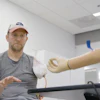
People with lower-limb injuries who cannot stand or walk often need intensive clinical rehabilitation and expert-guided physiotherapy.
This medical care retrains the limbs and supports the brain’s ability to relearn movement, with the goal of restoring greater mobility and ultimately, helping the patient to walk again.
But traditional rehabilitation methods today have its limits – it’s fatigue-inducing, imprecise and requires expert, hands-on supervision throughout the rehabilitation session, which can last hours.
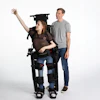
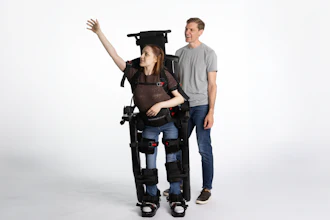
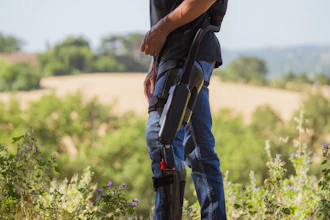
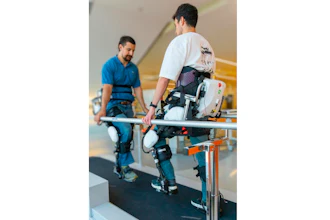
Founded in 2010, Onyx Healthcare – a leading medical device manufacturer based in Taiwan – collaborated with Intel and FREE Bionics to design an AI-powered exoskeleton robot that aims to boost the clinical rehabilitation experience.
FREE Walk is a robotics-based AI solution that leverages two unique Intel-based hardware and software components – the Intel Core Ultra series family of CPUs and the Intel OpenVINO software stack – into a lightweight, wearable exoskeleton worn by patients.
Together, these technologies help speed up the rehabilitation process by guiding the patient through safe, consistent and repetitive limb-focused movements to reactivate the brain’s neural pathways and promote neuroplasticity.
Intel-based technology helps patients to walk again
In a nutshell, John Chuang, President, Onyx Healthcare says this tech helps patients to relearn a skill we often take for granted: walking.
“Over the last 16 years, we’ve been able to leverage Intel’s technology to transform the landscape of medical device care, which really sets the stage for widespread AI adoption in this field,” says Chuang.
He explains how AI-focused algorithms run on an Intel Core Ultra processor inside the exoskeleton, leveraging the CPU, integrated GPU and NPU architecture to optimize across workloads and different software configurations.
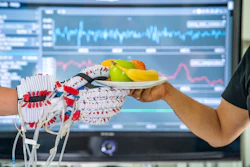
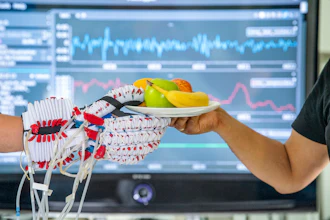
These algorithms also works in tandem with pressure sensors, electromyography (EMG) force sensors and inertial sensors to offer gait stability and quickly translate real-time bio-electric muscle signals into predicting the next level of movement.
Onyx also utilizes OpenVINO to help its engineering teams evaluate and deploy the right AI models across CPU, NPU and GPU resources.
The outcome: more efficient edge AI inference that minimizes latency, maximizes performance and enables the team to easily scale the platform.
From pilot to practice: Intel-powered AI is advancing smart rehabilitation
“Intel’s highly efficient, low-power NPU [neural processing unit] and OpenVINO software stack really transforms smart rehabilitation from a conceptual showcase on paper into a medical AI solution that is now being used across the world,” said Chuang.
The Intel-based platform supports local edge AI processing during training sessions, while OpenVINO helps optimize AI inference for motion-related analysis and human-machine interaction.
By keeping time-sensitive AI processing close to the device and then using accumulated training data for cloud-based review and product improvement, the solution can better balance essential real-time responsiveness with long-term product learning and scaling, Chuang explained.
Intel-Powered Rehab Exoskeleton Scales Worldwide With 40,000 Patient Training Records
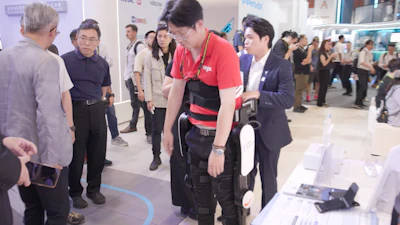
Today, FREE Walk exoskeletons – powered by proprietary Onyx Healthcare solutions and Intel-based hardware and software tech – is used by approximately a third of medical-center-level hospitals in Taiwan.
In traditional lower-limb rehabilitation, a single session may require up to four therapists to assist one patient. With the AI-powered exoskeleton, therapist support can be reduced by at least two people, improving staffing efficiency by approximately 50% per session.
It has also accumulated more than 40,000 patient training records across 22 other countries.
“It has been a wonderful journey working with Intel,” Chuang said.
“We’re excited to continue our collaboration with Intel to bring more advanced AI technologies into reliable, safe, and long-term deployable medical-grade solutions that operate effectively in real clinical environments.”