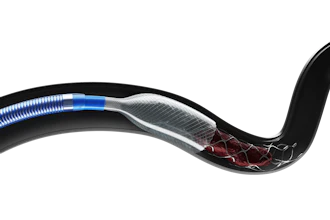
Medtronic said it has received Breakthrough Device designation from the FDA for its IN.PACT BTK Paclitaxel Drug-Coated Balloon Catheter, which is an investigational technology currently in development.
Peripheral arterial disease (PAD) below the knee represents one of the highest-risk patient groups in the peripheral vascular space. Drug-coated balloons are widely used to treat PAD in arteries above the knee and have demonstrated improved vessel patency compared with conventional balloon angioplasty.
However, because there is currently no commercially available drug-coated balloon indicated for PAD treatment below the knee in the U.S., uncoated percutaneous transluminal angioplasty (PTA) remains the primary endovascular treatment option for many CLTI patients despite high rates of restenosis and repeat intervention.
“Finding effective therapies for CLTI patients with lesions below the knee is one of the most pressing unmet clinical needs in contemporary endovascular therapy,” said Eric Secemsky, MD, interventional cardiologist with Beth Israel Deaconess Medical Center, who will serve as the global principal investigator for the planned IN.PACT BTK DELTA clinical trial. “The IN.PACT BTK DELTA clinical trial is an important opportunity to find a better treatment option for these at-need patients.”
The investigational IN.PACT BTK device is built on the IN.PACT platform with the proprietary FreePac paclitaxel coating, which has demonstrated sustained safety and effectiveness in femoropopliteal disease through five years in randomized clinical studies.
“Our planned IN.PACT BTK DELTA trial reflects our confidence in the safety and effectiveness of paclitaxel drug-coated balloons,” said David Moeller, sr. vice president and president, Medtronic Peripheral Vascular Health, which is part of the company’s Cardiovascular portfolio. "We look forward to generating rigorous clinical evidence to find better solutions for patients facing one of the most serious forms of PAD."