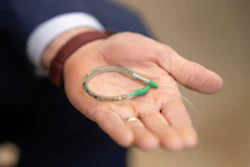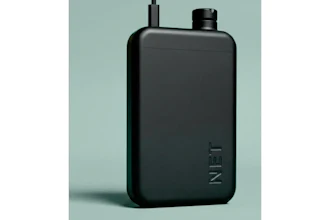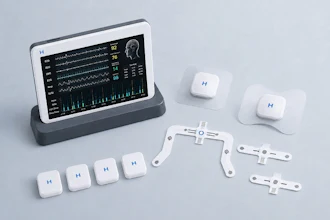
Sibel Health said it has been awarded a $3.5 million Direct-to-Phase II Small Business Innovation Research (SBIR) contract from the Advanced Research Projects Agency for Health (ARPA-H) to develop an ambulatory edema monitor—a wearable device capable of continuously and objectively tracking lower-leg edema outside of a clinical examination room.
Tissue edema—the pathological accumulation of fluid—is a consequence of a range of medical conditions from breast cancer to venous insufficiency. In the case of congestive heart failure, a condition affecting more than 6 million Americans and costing the U.S. healthcare system over $35 billion annually in hospitalizations and readmissions, lower leg swelling can be an early sign of clinical deterioration. Yet the standard clinical method for assessing edema has not meaningfully changed in decades: a clinician presses a finger into the patient's skin for several seconds, releases it, and grades the resulting indentation on a four-point scale. ARPA-H recognized a need for new objective wearable technologies that can accurately determine edema status to influence clinical decision making. This Direct-to-Phase II award to Sibel Health reflects a transformative, high-risk, high-reward investment that ARPA-H was created to catalyze for a clinical symptom that has been long ignored.
Sibel Health, spun out of the research laboratory of Professor John Rogers and the Querrey Simpson Institute for Bioelectronics at Northwestern University, will develop an ultra-thin, soft, and flexible wearable sensor capable of assessing tissue fluid status wirelessly. This new sensor will integrate with Sibel's existing FDA-cleared mobile software platform and cloud infrastructure. Continuous ambulatory edema monitoring requires solving a set of deeply intertwined hardware, sensing, signal processing, and clinical challenges that have prevented prior efforts from reaching commercial or clinical viability.
"ARPA-H is making the kinds of investments in health research and development that the private sector alone will not make—especially when the technology risk is high and the unmet clinical needs have been underserved. We are deeply grateful to ARPA-H for selecting Sibel and our team to execute on this program," says Steve Xu MD CEO of Sibel Health and Principal Investigator.