HoneyNaps, specializing in AI-powered sleep medical devices, has developed a wireless polysomnography system that combines patch-based skin sensors with artificial intelligence-driven analysis.
Polysomnography (PSG) is the standard diagnostic test for sleep disorders such as sleep apnea. Conventional PSG generally requires patients to spend a night at a hospital while connected to more than 24 wired sensors placed across the face, chest, abdomen and legs. The complex setup and restricted movement can cause discomfort, and sleeping in an unfamiliar clinical environment may also affect patients' usual sleep patterns, potentially making it more difficult to capture representative data.
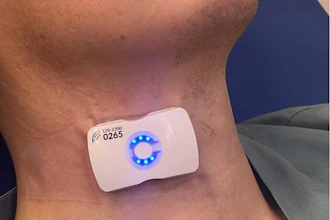
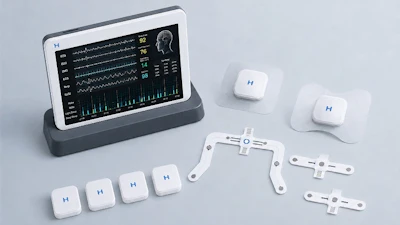
To overcome these limitations, HoneyNaps redesigned the conventional PSG measurement architecture. Its Wireless PSG system consists of four compact skin patches: a Head Sensor, Chest Sensor, Body Sensor and Leg Sensor. Together, they consolidate the functions previously performed by numerous wired sensors into a single wearable platform.
Once the patches are attached, the system can capture the primary physiological signals required for polysomnography without cables. These include electroencephalography (EEG), electrooculography (EOG), electrocardiography (ECG), electromyography (EMG), respiratory airflow, blood oxygen saturation (SpO₂), body position and physical activity.
The system's capabilities extend beyond wireless connectivity. HoneyNaps incorporated a six-layer flexible printed circuit board design, an integrated analog-to-digital converter and sensor architecture, wireless noise-reduction technology and electrostatic discharge protection to maintain medical-grade signal quality during extended monitoring. A low-power design is intended to reduce the burden on patients while supporting potential use in both hospitals and future home-based polysomnography settings.
Data collected through the wireless skin sensors are integrated with SOMNUM, HoneyNaps' AI-powered sleep analysis software. The software automatically analyzes key sleep indicators, including sleep stages, sleep apnea events, arousals and periodic limb movements during sleep. By automating parts of the traditionally labor-intensive scoring and interpretation process, the platform is designed to help medical professionals review sleep studies more efficiently. It also incorporates edge-computing technology to process large volumes of physiological data in real time and support integration with healthcare institutions' centralized management systems.
The Wireless PSG platform builds on HoneyNaps' accumulated research and development in sleep sensing and AI analysis. The company has developed technologies including SOMNUM Scanning, a contactless sleep-sensing pad; single-channel EEG technology; AI-based sleep diagnostic software; and a digital therapeutic for insomnia. By integrating these technologies into a patch-based wireless medical device, HoneyNaps aims to establish a platform that can expand beyond hospital-based sleep studies into home sleep testing, remote monitoring and broader digital healthcare services.