Senphonix, a medical technology startup developing SleeveSense, a wearable designed to monitor patients’ vital signs continuously over days, weeks or months at a time, today announced a Small Business Innovation Research (SBIR) Phase I award from the U.S. National Institutes of Health (NIH), through its National Heart, Lung, and Blood Institute (NHLBI).
The award is its second federal research grant in a matter of weeks, following a National Science Foundation (NSF) STTR Phase I award announced in September. The NIH grant will fund testing of the platform’s software stack in a clinical environment, cloud and database scaling, and cybersecurity work toward SOC 2 Type II readiness. Taken together, it advances a platform built to address one of healthcare’s most persistent and costly problems: the manual, intermittent way patient vital signs are captured.
The two recent grants add to a fast-growing base of non-dilutive funding and partnership behind SleeveSense, spanning the NSF, the NIH, Microsoft, the Arizona Commerce Authority through the WearTech Applied Research Center, and the University of Arizona, reflecting growing momentum behind the problem it sets out to solve.
The need is significant and well documented. Nurses can spend up to and sometimes in excess of 20 percent of every shift taking and documenting vital signs manually, time drawn away from patient care. Because those readings are episodic, changes in a patient’s condition can go unseen between checks. After discharge, many patients are not monitored at all, creating a gap associated with costly, avoidable readmissions. Automated, always-on monitoring is intended to speak to each of these at once: reducing manual workload, supporting earlier awareness of a patient’s changing condition, and helping health systems pursue fewer readmissions and new remote-patient-monitoring revenue.
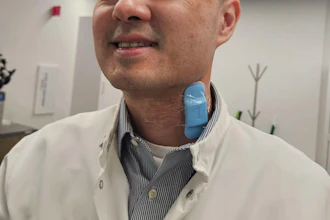
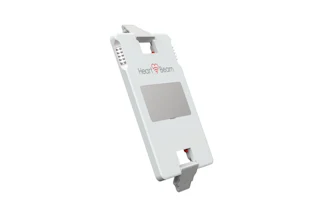
SleeveSense is a comfortable sleeve designed to be worn on the upper arm without interruption long term, in and out of the hospital, and to deliver clinical-grade measurements, an accuracy target the company plans to validate in its upcoming clinical testing. It charges wirelessly, with no need to remove or handle the device. The commercial model is built to remove upfront financial risk for the hospital: Senphonix provides and manages all the infrastructure and only bills once a sleeve is assigned to a patient, so there is no capital outlay and nothing to pay for unused capacity.
“The barrier has never really been the sensor; it’s been building something hospitals can actually put to work and doing it with no upfront cost for them to try,” said Mike Haldane, Co-Founder and Co-CEO of Senphonix and principal investigator on the NIH award. “We designed SleeveSense to reduce manual workload and fit the way care teams already operate, with a light footprint and the clinical-grade accuracy we are validating in testing. NIH’s support helps us get the software clinically ready as we work toward bringing SleeveSense to market following FDA clearance.”
By design, the data is available to clinicians within the electronic health record, both during the hospital stay and after the patient goes home. Once discharged, patients can also view their own vitals through a simple mobile app that runs on its own with no action required. The work builds on the company’s NSF STTR Phase I award which funds development of the wearable’s wireless hardware and the software platform itself, so the two federal grants together move the device and its software from prototype toward clinical readiness.
Senphonix expects to begin a clinical study of SleeveSense in late 2026 or early 2027 and intends to pursue U.S. Food and Drug Administration (FDA) 510(k) clearance in early to mid-2027, following clinical testing. The NIH award follows the company’s implementation of its quality management system, establishment of manufacturing partnerships, and review of its clinical testing protocol with the FDA.