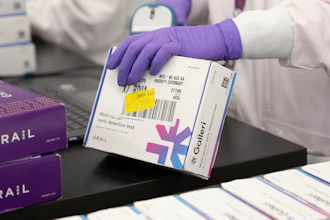
Abbott today announced the commercial availability of its Oncodetect MRD test, a personalized, whole-genome sequencing test designed to provide molecular insights during and after cancer treatment.
For more than 20 years, the Oncotype DX Breast Recurrence Score test has helped physicians use genomic information to personalize breast cancer treatment and is recognized as a standard of care in early-stage breast cancer. The next-generation Oncodetect test builds on that foundation, expanding Abbott's ability to provide molecular insights across the cancer care continuum. Abbott's broad cancer diagnostics portfolio spans cancer screening, hereditary cancer testing, genomic profiling, recurrence risk assessment, and MRD testing.
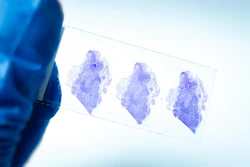
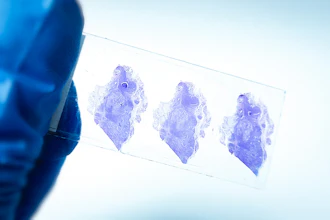
The personalized test uses a sample of each patient's tumor to identify its unique DNA markers, then looks for those same signals in the blood. At the heart of the next-generation Oncodetect test is MAESTRO, a technology developed at the Gerstner Center for Cancer Diagnostics at the Broad Institute of MIT and Harvard and enhanced by Abbott. Combined with whole-genome sequencing, this approach expands variant discovery from up to 200 variants in the first-generation test up to as many as 5,000 patient-specific variants. MAESTRO technology enriches tumor DNA from blood up to 1,000-fold before sequencing, making cancer signals easier to detect.1,2 Together, these advances achieve a 30-fold improvement in limit of detection to below one part per million. This ultrasensitive performance is designed to identify residual disease when ctDNA levels are especially low, including in early-stage disease and post-treatment settings.
Importantly, MAESTRO enables cost-efficient sequencing, allowing Abbott to offer the whole-genome Oncodetect test to all new patients from day one, rather than reserving the technology for select cases.
"For many people affected by cancer, finishing treatment does not mean the uncertainty ends," said Maimah Karmo, a triple-negative breast cancer survivor and president of the Tigerlily Foundation, a national women's health and oncology patient advocacy organization. "Waiting for the next scan and wondering whether cancer may return can take an emotional toll. New tools that give care teams more information about recurrence risk can support more meaningful conversations about what comes next."