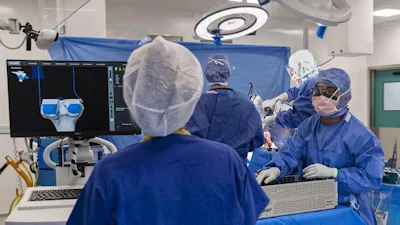
Robot-assisted knee replacement surgery is more precise than a surgeon on their own, but does not currently lead to improvements in patient outcomes, according to the RACER-Knee trial, the world's largest clinical study of its kind. This trial makes an important contribution to the evidence on robotics in health care and where future advances and research should focus.
The trial, coordinated by the University of Warwick and University Hospitals Coventry and Warwickshire (UHCW) NHS Trust, is published in The Lancet, the world's oldest and best-known general medical journal.
Robotic assistance is increasingly used in knee replacement surgery worldwide, in six per cent of procedures in the UK, compared with 16 per cent in the US and 42 per cent in Australia, with the aim of helping surgeons place the knee replacement more precisely and tailoring surgery to a patient’s anatomy.
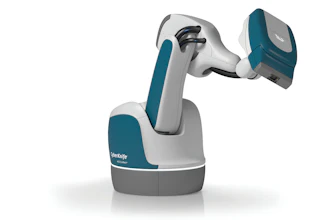
The National Institute for Health and Care Research (NIHR) funded the UK-wide RACER-Knee trial in partnership with Stryker, who make the robot that was tested. It was led by the Warwick Clinical Trials Unit, UHCW NHS Trust and the Royal Orthopedic Hospital in Birmingham. It is the world's largest double-blinded randomized control trial comparing conventional total knee replacement to surgery assisted with the Stryker Mako robotic system, the most widely used system globally.
The trial found that one year after surgery, patients in both groups had similar recovery, mobility and pain levels. While robotic assistance was more precise, it did not translate into improvements in patient outcomes within the first year after knee replacement. The trial also found that robot-assisted knee replacement was not linked to an increased risk of serious adverse events, suggesting it was as safe as the usual approach to surgery.
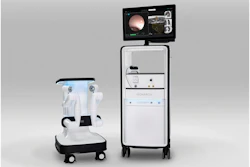
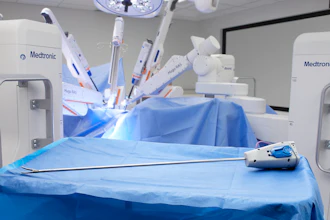
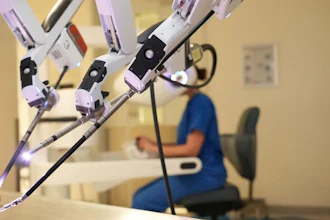
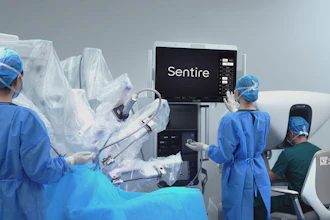
 Mako robotic system in use. UHCW NHS Trust
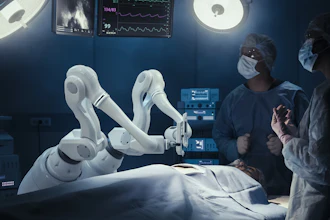
Total knee replacement is one of the most common elective operations worldwide for treating knee arthritis. Conventionally, surgeons rely on their experience and a standard set of instruments to perform the procedure. Some surgeons now use a robotic arm, controlled by the surgeon, to assist in the operation. The system positions instruments with high precision and gives surgeons greater flexibility to vary cutting angles and depths, enabling personalized approaches tailored to individual patient’s anatomy in ways conventional surgery cannot achieve.
339 patients from 10 hospitals, under the care of 33 surgeons across the UK, took part in the trial. Despite the potential advantages of robotics, the trial found that there was no meaningful difference in the primary measure, the Forgotten Joint Score, 12 months after the operation. The score measures the extent to which patients are aware of their artificial joints during daily activities, and patients showed equal results with their artificial joints, whichever method was used for doing the replacement. Patients also showed comparable outcomes in their ability to walk, their experience of pain in the first three months and at 12 months, their pain in hospital, and the likelihood of a follow-up operation.
The researchers will continue to follow-up patients for ten years to find out if there are any long-term differences between the two approaches. Importantly this might find out if there is a difference in number or patients needing more surgery for their knee.
 Mako system being prepped for surgery.UHCW NHS Trust
Robotic TKRs took longer to perform (on average 10.5 minutes) and were around £950 (~$1,300) more expensive on average, but were more precise and were not associated with an increased risk of serious adverse events, suggesting the robotic procedure was as safe as conventional surgery. Under current NHS cost limits, the robotic system tested in this trial was not cost-effective over the first year after surgery.
In the future, if the use of robotic assistance could help surgeons to better tailor to each patient's individual anatomy, then the robotic system's better precision could become worthwhile. This would need more development and further research but is an exciting area for future studies.