Advances in optical fiber technology are helping redefine what is possible in minimally invasive medicine. Once used primarily in ophthalmology and dermatology, fiber-enabled laser systems now support a growing range of therapeutic, diagnostic and sensing applications—from cardiovascular interventions and kidney stone treatment to real-time physiological monitoring.
The evolution of both lasers and specialty optical fibers is enabling physicians to perform increasingly precise procedures while reducing invasiveness and improving patient outcomes.
Healthcare continues to move toward more targeted therapies. Optical fibers allow clinicians to deliver laser energy with exceptional precision through very small devices, minimizing damage to surrounding tissue while reaching difficult anatomical locations.
Today, fiber- and laser-based technologies are integral to procedures including laser atherectomy, laser lithotripsy, electrophysiology, tissue ablation and photodynamic therapy. At the same time, they support advanced diagnostic techniques such as optical coherence tomography (OCT) and fluorescence imaging, giving physicians clearer visualization and more informed clinical decision-making.
But delivering laser energy is only part of the story.
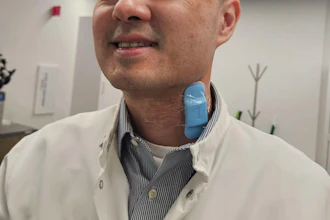
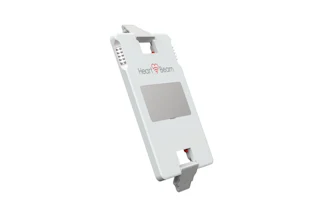
One of the most exciting developments is the growing role of optical fibers as sensing platforms. They can measure physiological parameters such as blood oxygen saturation, blood pressure and tissue temperature in real time during a procedure. That immediate feedback has the potential to improve both safety and therapeutic effectiveness.
As medical procedures become more sophisticated, so do the requirements for the fibers themselves. Medical-grade optical fibers must combine excellent optical performance with mechanical flexibility, durability and biocompatibility. They must reliably transmit energy or collect optical signals while navigating complex anatomy inside increasingly smaller medical devices.
Those demands mean there is no universal solution.
Different procedures require different wavelengths, power levels and mechanical characteristics. While standard fused silica fibers remain an excellent choice for many applications, specialty fibers can be engineered for specific spectral regions or optimized optical performance that simply isn’t possible with conventional fibers.
Selecting the appropriate fiber has become a critical engineering decision that directly influences device performance and clinical outcomes.
Equally important is system integration. A fiber’s performance depends not only on its own design but also on how it functions within the broader medical device.
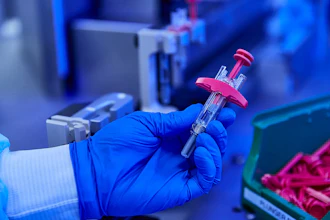
The fiber is one component of a much larger system that includes lasers, connectors, catheters, sensors and packaging. Achieving optimal clinical performance requires careful integration of every element.
Looking ahead, expect continued innovation as precision medicine drives demand for increasingly targeted therapies. Specialty optical fibers, advanced laser control and integrated sensing technologies are converging to create devices that can both treat disease and provide real-time diagnostic feedback.
We’re seeing optics, materials science and medical device engineering come together in new ways. As these technologies continue to advance, they’ll enable new clinical applications and help physicians perform procedures more safely, more efficiently and with greater precision.
As minimally invasive medicine continues to evolve, optical fiber technology is becoming more than simply a means of delivering light. It is emerging as a foundational platform for therapy, diagnostics and sensing—one that will continue to expand the possibilities of precision medicine for years to come.
Dr. Devinder Saini is Director, Advanced Technologies at Phillips Medisize in Caldwell, Idaho, where he is responsible for product development and new technologies. Prior to joining Phillips Medisize, he served as VP of Technology at Fiberguide for six years. He has more than 30 years of experience in the optical fiber industry and was a founding Vice President and Chief Scientist at OxySense, Inc. He also served as Vice President and Chief Scientist at FCI Environmental, Inc.
He holds a PhD in Physics from City, University of London, a master's degree in Materials Science, and a bachelor's degree in Physics and Astrophysics. His expertise includes the development and manufacture of fibre-optic based sensors and instrumentation.