More than three-quarters of donated lungs offered for transplantation are not used, according to the UK’s National Institute for Health and Care Excellence, contributing to a chronic shortage of organs for patients with end-stage lung disease.
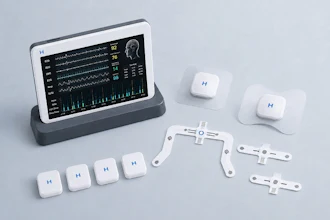
Researchers hope a new medical device incorporating monitoring technology they recently developed could ultimately help change that by continuously measuring key indicators of lung function while donor organs are being maintained outside the body.
Continuous monitoring of important health indicators, or biomarkers, could provide transplant teams with far more timely and detailed information than the hourly laboratory tests they now rely on in clinical practice.
The new device, called MetaboSense, was developed in collaboration by researchers at the University of Waterloo and clinicians at University Health Network (UHN) in Toronto, home to one of the world’s leading lung transplant programs.
Prior to transplantation, donated lungs can be maintained and assessed outside the body using ex vivo lung perfusion (EVLP), a sophisticated technology pioneered at UHN nearly two decades ago. During the EVLP process, surgeons assess lung health in part by analyzing glucose and lactate levels in a nutrient-containing solution.
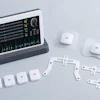
Those measurements are currently taken about once an hour and require manual sampling and laboratory analysis. MetaboSense continuously monitors the same biomarkers, giving transplant teams a clearer, more dynamic picture of lung function over time.
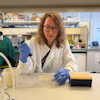
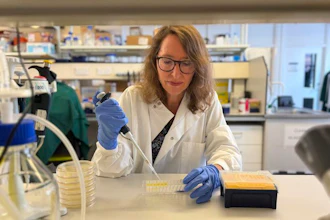
“Our work shows that important metabolic changes can take place in the gaps between manual, hourly samples,” said Dr. Mahla Poudineh, a professor of electrical and computer engineering and the Canada Research Chair in Health Monitoring BioNano Devices at Waterloo.
“Following a lung’s metabolic trajectory continuously, rather than hourly, would give transplant teams more and better evidence with which to potentially decide whether to accept or decline it for transplantation.”
Researchers evaluated MetaboSense in both clinical and EVLP research experiments, where it produced measurements that closely aligned with laboratory analysis.
The additional information provided by MetaboSense, the researchers hope, will help transplant teams identify more viable donor lungs and, potentially, rehabilitate some organs that might otherwise be rejected.
Poudineh supervised the study with Dr. Andrew Sage, associate scientist at UHN’s Toronto General Hospital, in a project funded by the Canadian Institutes of Health Research.
“Working closely with Dr. Poudineh’s team at the University of Waterloo has allowed us to develop a new tool that will dramatically improve how we collect data during EVLP,” Sage said. “By giving us continuous, real-time measurements of lung function, this technology can help us better assess and predict how donor lungs are performing and ultimately help identify more lungs that can be safely used for patients in need of a transplant.”
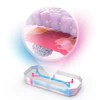
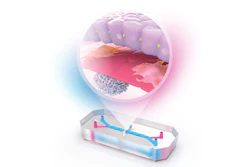
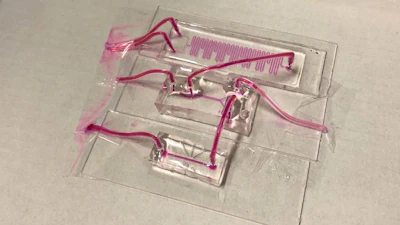
The MetaboSense monitoring device consists of modular glass chips about the size of microscope slides. Its modular design could allow the technology to be adapted for ex vivo liver, kidney, heart and pancreas perfusion, where glucose and lactate are also important indicators of organ health.
A paper on the study, MetaboSense: An Integrated Quantum Dot-Mediated Aptamer Assay and Modular Microfluidic Platform for Continuous In-Line Monitoring of Lung Metabolism during Ex Vivo Perfusion, was recently published in Advanced Science.