eGenesis, a biotechnology company developing human-compatible organs for transplantation, and Mass General Brigham today announced that a patient with end stage kidney disease (ESKD) has become the first patient to surpass one year of dialysis independence following transplantation with a genetically engineered pig kidney.
The achievement represents the longest sustained function of a genetically engineered porcine kidney in a living human recipient and a significant advancement toward establishing xenotransplantation as a viable treatment option for patients with ESKD.
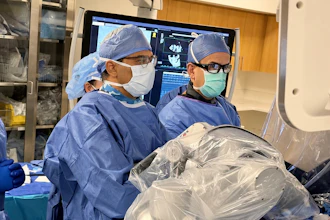
The patient, Molly Falco, a 58-year-old female, had suffered from kidney failure due to a condition diagnosed during childhood. She began dialysis in 2024. She was transplanted on November 22, 2025, with eGenesis’ investigational EGEN-2784 kidney at Massachusetts General Hospital, a member of the Mass General Brigham Health System (MGB), under the U.S. Food and Drug Administration’s (FDA) Expanded Access pathway. The clinical xenotransplantation program is led by Leonardo V. Riella, MD, PhD, Medical Director of Kidney Transplantation at Massachusetts General Hospital and the Mass General Brigham Transplant Center, with transplant surgeons Tatsuo Kawai, MD, PhD, and Nahel Elias, MD, leading the surgical procedure.
One year following the procedure, Falco’s transplanted kidney continues to function, and she remains free from dialysis, demonstrating the potential of long-term durability of the EGEN-2784 genetically engineered porcine kidney.
“Today marks a historic achievement in transplantation,” said eGenesis CEO Michael Curtis, Ph.D. in a statement. “For the first time, a genetically engineered porcine kidney has enabled a patient to remain free from dialysis for an entire year. This milestone is the culmination of decades of scientific research and medical innovation. We are deeply grateful to this patient, her family and the extraordinary clinical team at Mass General Brigham whose courage, commitment and collaboration have made this achievement possible. This milestone strengthens our confidence in the potential of genetically engineered organs to transform the treatment of organ failure and remove supply as a barrier to transplantation.”
“A year ago, I didn’t know what the future would hold. Living with kidney disease had taken so much away from me, and I wanted the chance to get my life back,” Falco said. "Today, I’m celebrating something I once thought might never be possible. I’m incredibly grateful to my doctors, my family and everyone at MGB and eGenesis who made this possible. My hope is that one day, everyone waiting for a kidney transplant can have xenotransplantation as an option that is readily available to them.”
The milestone reflects a growing body of clinical experience with eGenesis’ EGEN-2784 genetically engineered porcine kidney. To date, six patients have received EGEN-2784 through the FDA’s Expanded Access pathway.
EGEN-2784 is an investigational genetically engineered porcine kidney developed using eGenesis’ proprietary multiplex genome engineering platform. The company’s lead candidate carries three classes of genetic modifications designed to improve compatibility and support long-term function in human recipients: 1) inactivation of endogenous retroviruses to reduce the risk of viral transmission. 2) elimination of three glycan antigens to reduce the risk of hyperacute immune rejection 3) insertion of seven human transgenes to regulate immune response, reduce inflammation, improve coagulation compatibility and regulate complement activation.
More than 825,000 Americans and millions worldwide suffer from ESKD. While organ transplantation remains the gold standard for improving survival and quality of life, the severe shortage of donor organs limits access to transplantation. Fewer than 28,000 kidney transplants were performed in the U.S. in 2024. For those unable to receive a transplant, dialysis remains the only option. The five-year mortality rate associated with dialysis is greater than 55%, higher than mortality rates associated with the most common types of cancer. Genetically engineered porcine-derived kidneys may offer a potential solution to this crisis.
eGenesis is developing genetically engineered organs to address this fundamental supply constraint and expand access to transplantation. The company’s broader platform includes clinical kidney and liver programs and a preclinical heart program, all supported by a common genetically engineered donor platform.
The U.S. Food and Drug Administration (FDA) has cleared eGenesis to conduct a Phase 1/2/3 trial (RESTORE) to evaluate EGEN-2784 in 33 patients with kidney failure who are between 50 and 70 years of age and waitlisted for a human donor kidney transplant. eGenesis expects to initiate the RESTORE registrational trial in the first quarter of 2027.