Flosonics Medical today announced a development contract with the Biomedical Advanced Research and Development Authority (BARDA), part of the Administration for Strategic Preparedness and Response (ASPR) within the U.S. Department of Health and Human Services.
The contract supports FloPredict, an AI-enabled software enhancement to the company's FDA-cleared FloPatch device and extends the company's real-time ultrasound technology into trauma care and mass casualty response.
Through the contract, BARDA is funding the development of a capability to help clinicians detect internal bleeding after traumatic injury, work which is aimed at strengthening mass casualty response capabilities for events such as a nuclear detonation. The award, made through BARDA's Burn and Blast Medical Countermeasures program, includes initial funding of approximately $15 million, with a total potential value of up to approximately $70 million if all options are exercised.
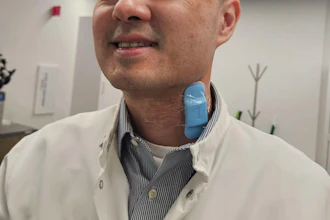
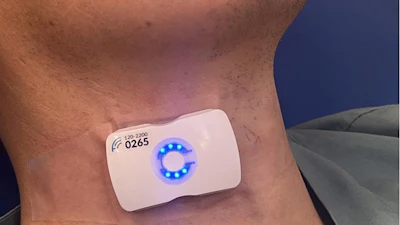
FloPatch is an FDA-cleared wireless Doppler ultrasound device that enables rapid, non-invasive, real-time hemodynamic assessment to help guide fluid resuscitation. The device has been used on more than 13,000 patients across more than 30 hospitals in the U.S., including routine use in sepsis, hypotension, and other critical care workflows where clinicians need timely insight into a patient's likely response to fluids.
In collaboration with BARDA, Flosonics Medical will develop FloPredict, an AI algorithm designed to apply innovative hemodynamic analytics to the Doppler signals FloPatch collects. If successful, FloPredict could help clinicians identify patients at risk of complications from internal hemorrhage who may require urgent intervention. In trauma and mass casualty settings, where fast and objective information is scarce, that capability is intended to support quicker triage and better use of limited resources.